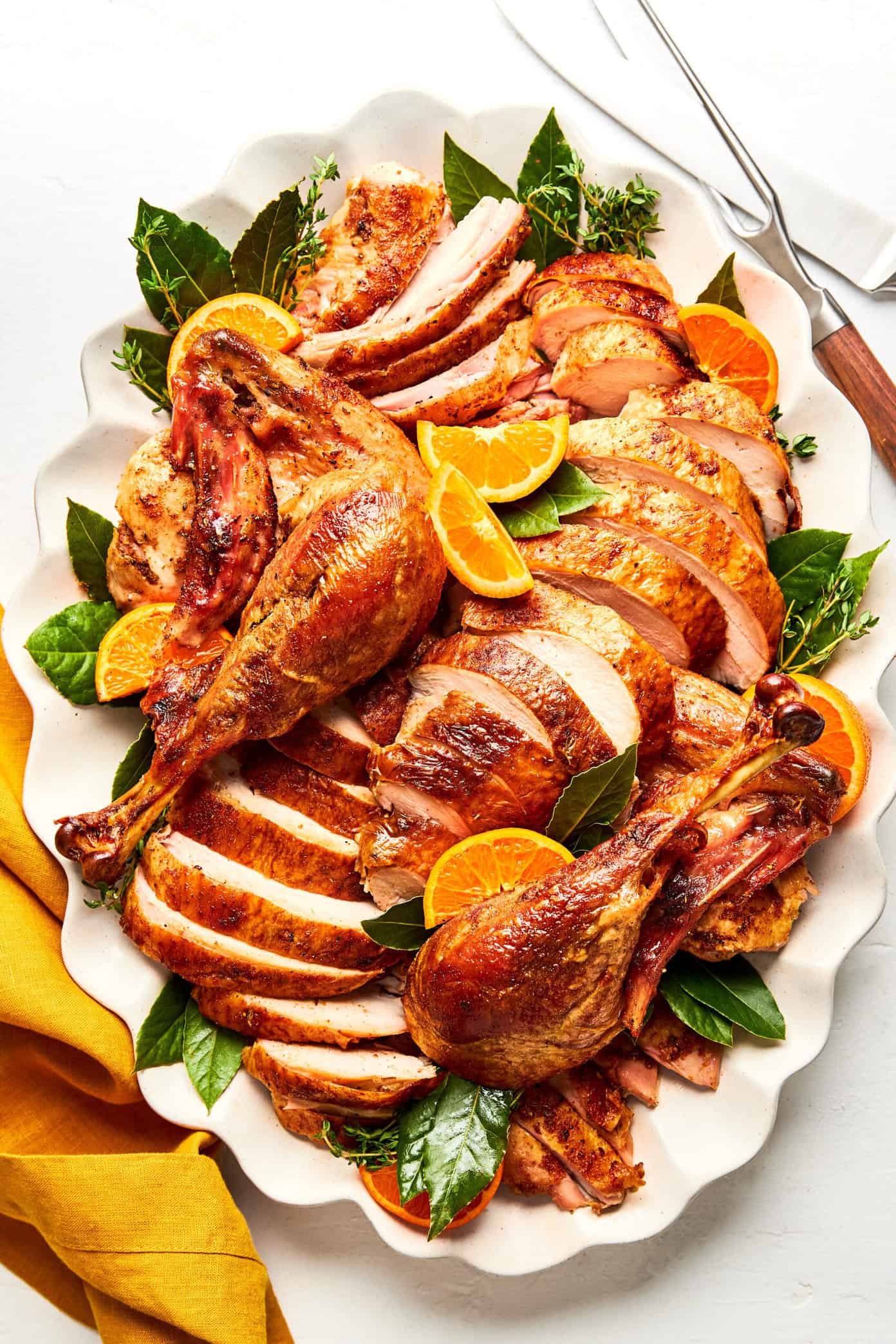
The quest for the perfect holiday turkey often feels like a culinary Everest. For generations, home cooks have grappled with the dilemma: how do you achieve that elusive balance of incredibly moist, flavorful meat and irresistibly crispy, golden-brown skin? If you've ever found yourself wrestling with a giant bird, battling dry spots, or wishing for a more profound flavor, then it's time to discover the game-changing technique that consistently delivers: the dry brined turkey.
Forget the messy, space-consuming liquid brines that often leave you with a waterlogged, oddly textured bird. Dry brining is a simpler, more effective method that transforms your turkey into a masterpiece of succulence and savory perfection. It's the secret weapon of professional chefs and seasoned home cooks alike, promising a turkey that will not only be the talk of your table but will also become your new go-to method for every future feast.
The Dry Brine Difference: Why It Reigns Supreme Over Traditional Methods
At its core, dry brining is astonishingly simple: it involves seasoning your turkey generously with salt (and often other aromatics) and allowing it to rest uncovered in the refrigerator for a period before roasting. While the concept seems straightforward, the science behind its effectiveness is what truly sets it apart.
This technique, popularized in the culinary world by chefs like Judy Rodgers of Zuni Café, who famously perfected salting chickens days before roasting, focuses on deep seasoning and optimal moisture retention without the drawbacks of its liquid counterpart. A traditional wet brine, while aiming to add moisture, often results in a turkey that absorbs too much water. This added water can dilute the natural turkey flavor and alter the meat's texture, making it spongy or rubbery. Moreover, the wet surface makes achieving truly crispy skin a significant challenge.
The dry brined turkey method, however, works differently:
- Intense Flavor Penetration: When salt is applied to the turkey's surface, it initially draws out moisture through osmosis. This moisture then dissolves the salt and any accompanying seasonings, creating a concentrated, flavorful brine on the turkey's surface. Over time, this seasoned liquid is reabsorbed into the meat, carrying the flavor deep into the muscle fibers.
- Superior Moisture Retention: The salt also works to denature the proteins in the turkey's muscle tissue. This process helps the muscle fibers relax and prevents them from seizing up and expelling moisture during cooking. The result? A remarkably tender and juicy turkey, even the notoriously lean breast meat.
- Unparalleled Crisp Skin: Perhaps one of the most beloved benefits of a dry brined turkey is its incredibly crisp skin. By allowing the turkey to sit uncovered in the refrigerator, the surface skin dries out significantly. This dehydration is crucial for achieving that beautiful, crackling, golden-brown exterior that is the hallmark of a perfectly roasted bird. No more flabby, pale skin!
- Effortless Simplicity: Say goodbye to struggling with large brining bags, buckets, and the risk of cross-contamination from sloshing liquids. Dry brining requires minimal equipment and is a much cleaner, less fussy process. There’s no need for basting during roasting, freeing up your oven and your attention.
Unlocking Unrivaled Flavor and Texture with a Dry Brine Turkey
The magic of a dry brined turkey isn't just in its simplicity; it's in the profound transformation it imparts to the meat. The process is a masterclass in culinary science, leveraging salt to enhance every aspect of the turkey's eating experience.
Beyond the surface-level benefits, the prolonged exposure to salt deeply seasons the entire bird, not just the outer layers. This means every bite, from the dark meat to the light, will be consistently flavorful and perfectly seasoned throughout. You won't find bland spots or the need for excessive gravy to compensate for lack of taste.
The "hang time" in the refrigerator is a non-negotiable step that allows the salt to do its work. As the moisture is drawn out and reabsorbed, the natural juices of the turkey become concentrated, intensifying its inherent savory notes. This concentration of flavor, combined with the salt's tenderizing effect, ensures that your turkey emerges from the oven not just juicy, but profoundly delicious.
Many home cooks attest that once they've tried a dry brined turkey, they never go back to other methods. The ease, the clean-up, and most importantly, the consistently stellar results make it an undeniable winner for any holiday spread or special occasion. It truly takes the guesswork out of achieving a perfectly cooked turkey, allowing you to walk into your turkey day feeling calm, prepared, and genuinely excited about the feast ahead.
Your Step-by-Step Guide to a Flawless Dry Brined Turkey
Achieving a show-stopping dry brined turkey is straightforward. Here’s how to do it:
1. Prepare Your Turkey
- Thaw Completely: Ensure your turkey is fully thawed. A typical rule of thumb is 24 hours in the refrigerator for every 4-5 pounds of turkey.
- Pat Dry: This step is critical. Use paper towels to thoroughly pat the entire turkey, inside and out, until it’s as dry as possible. Excess moisture on the skin will hinder crisping.
2. The Salt Rub
- Choose Your Salt: Kosher salt is ideal due to its crystal structure, which adheres well to the turkey and dissolves evenly. Avoid iodized table salt, which can impart a metallic flavor.
- Seasoning Blend: A simple salt rub is effective, but you can elevate the flavor with optional additions like freshly ground black pepper, garlic powder, onion powder, dried sage, thyme, or rosemary. A good general guideline is 1 tablespoon of kosher salt per 4-5 pounds of turkey, but many chefs simply go by feel, aiming for an even coating.
- Apply Generously: Rub the salt mixture evenly over the entire surface of the turkey, including the underside. For the breast, gently separate the skin from the meat and rub some salt directly onto the breast meat for deeper seasoning. Don't forget the leg and thigh meat!
3. The Refrigeration Period (Crucial "Hang Time")
- Placement: Place the seasoned turkey on a wire rack set inside a rimmed baking sheet. This allows for air circulation all around the bird and catches any drips.
- Uncovered in the Fridge: This is key! Do NOT cover the turkey. The open air of the refrigerator will work to dry out the skin, which is essential for that coveted crispy finish.
- Duration: Allow the turkey to dry brine for a minimum of 24 hours, but ideally 48 to 72 hours (2-3 days) for optimal flavor penetration and skin drying. The longer the better, within reason.
4. Roasting Day
- No Rinsing: Do not rinse the turkey before roasting. Rinsing will reintroduce moisture to the skin and wash away the absorbed seasonings.
- Bring to Temperature: For a more even cook, remove the turkey from the refrigerator about 30-60 minutes before roasting to let it come slightly closer to room temperature.
- Roast with Confidence: Place your foolproof dry brined turkey in a preheated oven and roast according to your preferred method. Many recommend a high initial temperature (e.g., 425°F for 30 minutes) to jumpstart browning, then reducing the heat (e.g., to 325°F or 350°F) for the remainder of the cooking time. Remember, no basting is needed! The dry brine has already locked in the moisture.
- Check for Doneness: Use a meat thermometer to ensure the turkey reaches an internal temperature of 165°F in the thickest part of the thigh, without touching the bone. For an easy dry brine turkey recipe for perfectly golden, moist meat, consistency is key.
- Rest, Rest, Rest: Once cooked, remove the turkey from the oven, tent it loosely with foil, and let it rest for at least 30 minutes (or up to an hour for larger birds). This allows the juices to redistribute throughout the meat, ensuring every slice is incredibly juicy.
Beyond the Turkey: Gravy and Leftovers
The beauty of a dry brined turkey extends beyond the carving board. The drippings collected in your roasting pan will be concentrated and packed with savory flavor, making the absolute best foundation for a rich, delicious homemade gravy. Since no additional liquid brine was used, your drippings won't be watered down, ensuring a robust gravy that perfectly complements the turkey.
And when it comes to leftovers, a dry-brined bird truly shines. The deeply seasoned, moist meat remains delicious for days, making for phenomenal sandwiches, soups, casseroles, and salads. You'll find yourself looking forward to every last morsel, a testament to the superior flavor and texture achieved through this simple yet transformative method.
In conclusion, if you're seeking to elevate your holiday meal and impress your guests with a turkey that is consistently juicy, incredibly flavorful, and boasts a beautifully crisp skin, then a dry brined turkey is your ultimate solution. It’s a technique that demystifies turkey roasting, replacing stress with confidence and delivering results that are nothing short of spectacular. Embrace the simplicity and savor the perfection – your taste buds (and your guests) will thank you.
